
PART 1
The Foundation
Building the Commercial Backbone

A THREE-PART CASE STUDY
This case follows Mimer SoftRadio’s transformation in three stages: building the commercial backbone, turning data into strategy, and preparing for international growth through partners and productisation.
Building the Commercial Backbone
From Reactive Sales to a Scalable, Packaged Offering
A Global Opportunity, and What It Takes to Capture It
Mimer SoftRadio, part of Northcom Group, is a globally leading provider of Radio-over-IP — software and hardware that enables organisations across defence, aviation, public transport, energy and maritime to communicate securely and seamlessly, regardless of the underlying radio environment. The technology is critical infrastructure. And the customers are demanding by nature: procurement officers in defence ministries, operations managers at international airports across Europe, safety directors in mining and offshore energy, and systems integrators working across multiple countries and regulatory frameworks.
The company had grown consistently for three consecutive years — in revenue and headcount alike — at roughly 30 percent annually. Strong numbers. But growth masks cracks. And the faster a company scales without commercial structure, the more clearly it becomes that the foundation isn't holding.
The most acute problem was visibility — or the absence of it. Support was handled entirely via email. No ticketing system, no SLA, no way to see what was waiting or how long it had been waiting. Issues fell through the cracks. Some customer relationships went quiet before the team noticed — a silent churn that could only be measured in hindsight, never prevented in real time.
Leads arrived the same way: via email. No routing, no ownership, no history. Nobody knew with certainty what happened between first contact and a closed order — and nobody could determine why so many quotes never converted. The pipeline had grown by over 200 percent in a year. Conversion hadn't kept pace.
The website ran on WordPress and attracted the wrong kind of traffic. Three out of four visits came from desktop — predominantly technicians and installers downloading the product documentation and technical drawings that Mimer generously makes available. Valuable for someone configuring a system. Not a buying signal. The decision-makers, procurement leads and operations directors — the people who actually sign contracts — weren't finding their way in.
And the ERP system operated in isolation. No integration with sales or support. Data moved manually in both directions and never converged.
The partnership with Intuvio didn't begin with a full platform overhaul. It began with the most immediate pain point: support. Service Hub was implemented first — tickets replaced email threads, issues got history, priority and ownership. For the first time, it was possible to answer a basic but critical question: what's waiting, who owns it, and how long has it been open?
From there, the build-out followed a logical sequence. The deals pipeline was structured in Sales Hub with defined conversion points at every stage. Marketing Hub connected campaigns, forms and leads into the same data environment. And finally — perhaps most symbolically — the website was migrated from WordPress to Content Hub. In two months. What had been a static technical library became an active, integrated part of the commercial machine, connected to CRM and tracked from first click.
All four modules. Six months.
annual growth in revenue and headcount
pipeline growth in a year
desktop share after the website became commercial
all four HubSpot modules implemented
The results appeared quickly, and in unexpected places. Website traffic tells a story on its own. The share of desktop visits dropped from 75 to 50 percent — not because technicians stopped visiting, but because a new type of visitor had arrived: decision-makers and buyers researching solutions on mobile, in the course of their workday. The site had stopped being a library and started attracting the right audience.
Leads now enter HubSpot directly, tracked from first touchpoint to closed order. Deals are created, assigned and followed up with full history. Support issues are logged as tickets — prioritised, escalated and closed with a complete audit trail. The ERP integration means data flows where it needs to, without manual intervention.
And for the first time, the leadership team could answer the questions that determine whether a business model actually works:
"Where in the process are we losing deals?"
"Which customers have gone quiet?"
"What converts — and what doesn't?"
That's the difference between reacting and leading.
Building the Commercial Backbone
From Reactive Sales to a Scalable, Packaged Offering
A Global Opportunity, and What It Takes to Capture It
Once HubSpot was in place and data started moving where it was supposed to, something happened that's hard to plan for but easy to recognise in hindsight: it became possible to ask the right questions.
For Mimer, that shift was decisive. The company carries one of the strongest gross margins in its segment — a number only possible when the product is genuinely differentiated. What the business had lacked was not product, not market, not customers. It had lacked the structure to convert interest into orders, and orders into predictable, repeatable revenue.
The quote pipeline had grown dramatically — but conversion rates that didn't match the pace of pipeline growth told a clear story: without structured follow-up data per stage, it was impossible to know whether lost deals were a matter of price, timing, competition or simply insufficient engagement between touch points. Every diagnosis required a guess.
The quoting process itself was person-dependent. A small group of experienced specialists carried most of the customer dialogue — technically brilliant, commercially effective, but a structural bottleneck. When the team doubled in size and the pipeline tripled in volume, that model hit its ceiling. Growth was capped by the capacity of a few key people.
And recurring revenue was barely off the ground. Software licences had grown significantly year over year — a clear signal that customers were willing to pay for continuity. But without a structured SLA programme and a commercial model to sit behind it, that potential wasn't converting into predictable annual revenue.
As data consolidated in HubSpot, dashboards were built — but not the kind designed to reassure a board that everything is fine. They were designed to change what a salesperson, a support lead and a CEO actually do on a Monday morning.
The sales team sees which deals risk stalling and where conversion drops across the pipeline. The support team spots patterns in ticket volume and can proactively flag customers who are going quiet before they churn. Leadership sees pipeline movement, customer health signals and revenue trends in real time — not in quarterly retrospectives.
Alongside the dashboards, an AI agent was introduced into the commercial process. Not to replace human judgement — but to put the right information in front of the right person at the right moment. Which accounts are in an active buying cycle? What have they been asking about? Are there behavioural signals that suggest they're ready to move forward? In an industry with long sales cycles and technically complex deals, that's a structural advantage: knowing the answer before the meeting, not after.
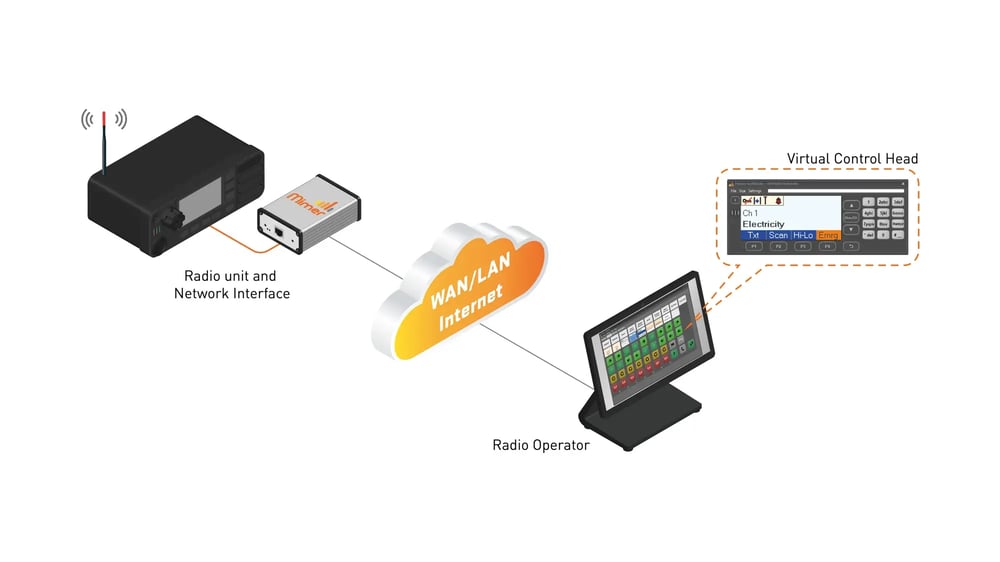
This is where the story really begins. The HubSpot implementation wasn't an isolated IT project. It was the foundation for a strategic shift that defines the entire direction of the business going forward.
Mimer is in the middle of a fundamental transformation: from an expert-led company building bespoke solutions toward a more packaged, partner-deliverable offering — supported by an SLA and licensing framework that lays the foundation for predictable recurring revenue. It's a change in how the company sells, delivers and prices. And it's a change that requires full visibility into pipeline, customer history and commercial data to execute.
The company is active in dozens of markets across four continents. Customers span Nordic defence, international aviation, maritime and autonomous systems, and industrial energy operations. A partner programme is being built to extend international reach without proportional headcount growth — a model designed to grow revenue significantly faster than the team grows.
That kind of leverage only works if every part of the commercial process is connected — from first click on the website to a renewed SLA agreement three years later.
The foundation is in place. The build has begun.
Building the Commercial Backbone
From Reactive Sales to a Scalable, Packaged Offering
A Global Opportunity, and What It Takes to Capture It
The global Radio-over-IP market is growing at roughly 15 percent annually — and the forces driving that growth are structural, not cyclical. Legacy radio networks built on TETRA and analogue infrastructure are reaching end-of-life across defence, public safety and transport organisations worldwide. The shift to broadband and Mission Critical PTT is accelerating. And the move toward cloud-first architecture means that organisations across four continents are actively searching for software-defined communication platforms that work with their existing hardware, deploy in weeks rather than months, and don't lock them into a single vendor's ecosystem.
That last point is where Mimer sits in a category of its own. The platform is vendor-agnostic by design — which means every major radio manufacturer is effectively a potential integration partner rather than a competitor. In a market where most alternatives either sell hardware with bundled software or require full stack replacement, Mimer deploys into existing environments. That's not a feature. It's a structural advantage.
The challenge was never the product or the demand. Customers were already coming from across the globe — inbound interest from markets as varied as Singapore, Australia, the United States and the Middle East, alongside established references in Nordic defence and international aviation. The quote pipeline was growing at a pace that most companies would be proud of.
But inbound interest without a structured commercial process is just noise. Without a CRM to capture and qualify leads, without a pipeline to track conversion, without a support structure that could scale across time zones and languages, the international opportunity was essentially unmanageable. Every deal required manual effort. Every customer relationship was stored in someone's head. And the company had no way to distinguish between a lead worth pursuing aggressively and one that would quietly disappear.
The digital infrastructure built with Intuvio changed that equation entirely.
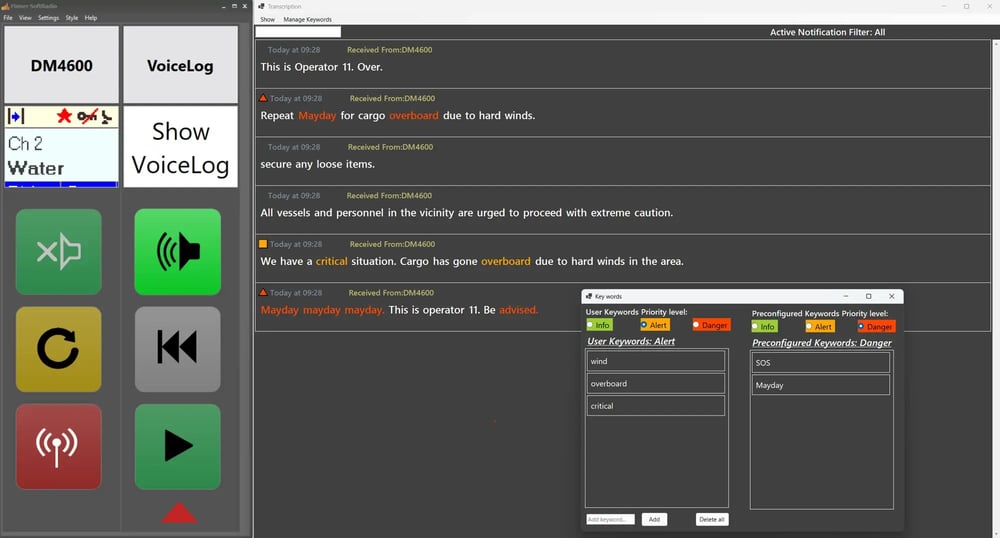
The strategic logic is clear. The Nordic market — Sweden, Norway, Denmark, Finland — is the foundation. Deep references in defence, aviation and public safety. Strong relationships. Proven delivery. That base protects the revenue floor and funds the expansion.
From there, the growth path runs through partners. Not because the product can't be sold directly, but because scaling internationally without proportional headcount growth requires a channel that multiplies reach without multiplying cost. A partner programme is being built to enable resellers, distributors and systems integrators across Europe, the Americas and Asia-Pacific to sell and deploy Mimer independently — with the commercial infrastructure, product documentation and support tooling to back them up.
That infrastructure is HubSpot. Partner leads flow into the same pipeline. Partner-sourced deals are tracked and attributed. Support from international customers reaches the same ticket system. The data model doesn't care whether a deal originates in Stockholm or Singapore — it captures, qualifies and follows up with the same discipline.
The ambition is for partner-sourced revenue to grow from a negligible base to a meaningful share of total revenue within two to three years. And critically, that growth is designed to happen while revenue grows significantly faster than the team — because the commercial infrastructure does the work that used to require people.
Running parallel to the commercial build-out is a transformation of the product offering itself. The move from bespoke, expert-delivered implementations toward a more packaged, standardised offering isn't just a go-to-market decision. It's the thing that makes international scale possible.
A systems integrator in the Netherlands can't sell a product that requires a specialist in Sweden to scope, quote and deliver every installation. A reseller in Singapore needs a configurator, a product catalogue and a licensing framework they can work with independently. The work of turning a technically brilliant but customisation-heavy platform into a packaged offering that partners can take to market is the hardest kind of transformation a technology company can undertake — and it's the one Mimer is in the middle of right now.
The SLA programme, the software licensing framework, the path toward predictable recurring revenue — none of it works without the commercial visibility that HubSpot now provides. Every new customer is an opportunity to deliver a more standardised solution rather than a bespoke build. Every renewal is an opportunity to move a customer up the SLA tiers. Every partner agreement is an opportunity to multiply reach without multiplying cost.
Three years ago, Mimer SoftRadio was a small Nordic specialist with an exceptional product and a commercial process that hadn't been designed at all. Today it is a globally active communications technology company with customers in dozens of markets, a structured pipeline, an SLA and licensing framework that opens the door to predictable recurring revenue, an AI-assisted commercial process, and a partner channel under active development.
The transformation didn't start with strategy. It started with a ticketing system, a deal pipeline, and a website migration. It started with making the invisible visible — and then building everything else on top of that foundation.